The Word Lucky Does More Than Describe Chance
Learn how “lucky” shapes character in casino stories by tracing its use in dialogue, props, ritual, and plot, without mistaking belief for cause.

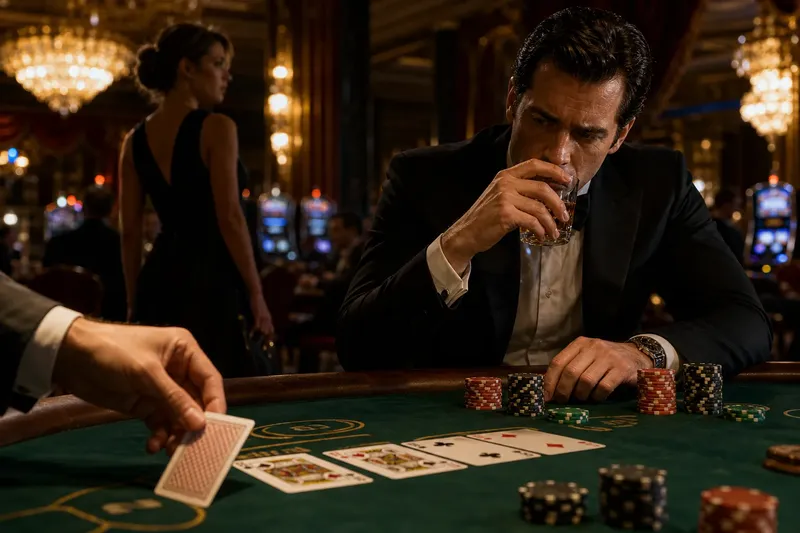
A chip skitters off the felt, and another player catches it before it reaches the floor. “You’re lucky,” someone says. In casino stories, the word lucky can turn a small accident into a character’s signature—or make a plain bit of dialogue feel like an omen.
To understand what “lucky” is doing, listen for its place in the scene: does it become a nickname, a ritual, or a phrase someone reaches for when they cannot explain an outcome? The answer can show how a story builds identity and atmosphere without settling whether fortune is real.
“Lucky” can turn a nickname into a role
“She drew the winning card” describes an event. “She’s lucky” gives the event a longer shadow: it assigns the character a quality that might follow her into the next scene.
That label can change how other characters behave. They might ask the supposed lucky player to choose a card, avoid sitting nearby, or blame her for a streak they dislike. The story has turned an adjective into a social role.
Watch for the difference between a character using the label about herself and other people applying it to her. Self-description can signal a chosen persona; a nickname imposed by the table can reveal what the group wants her to represent.
Repetition can make a verbal habit feel like folklore
When the same word returns around a player, a seat, or a token, it begins to sound like shared lore. The story need not confirm a supernatural cause. Repetition alone can make a room feel as if it has rules people inherit rather than question.
This is especially useful in a crowded casino scene, where the audience may not know every player’s history. A muttered “lucky seat” or a familiar tap on the table gives the room a sense of ritual. The phrase can make an ordinary setting feel charged while remaining ordinary speech.
Notice whether the word belongs to one character or circulates through the group. A private superstition suggests personal comfort; a phrase repeated by several players suggests a bit of local culture, even if they disagree about what it means.
A lucky charm reveals a character’s habits
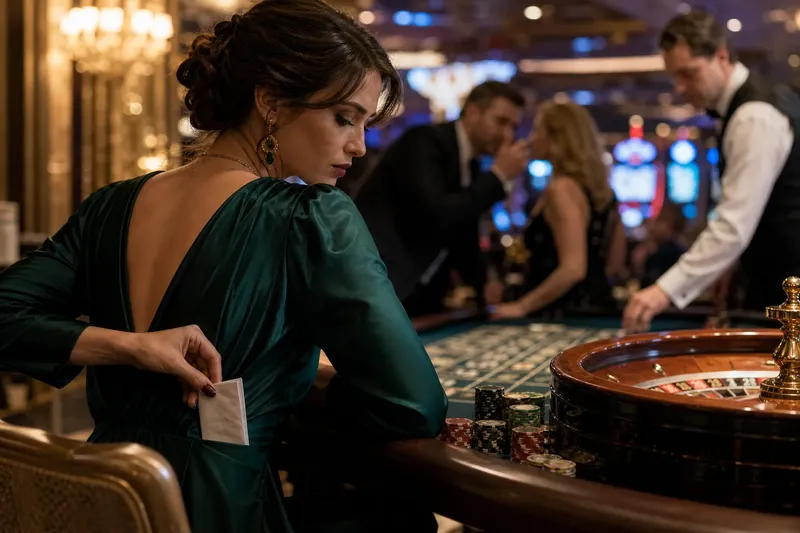
A coin tucked into a sleeve or a worn charm beside the cards gives an abstract idea a visible form. The prop lets a character touch, hide, lend, or lose a belief. Its meaning comes less from the object itself than from the attention the story gives it.
Look at when the object appears. If a player handles it before making a choice, the gesture may show routine or nerves. If it appears only after a win, it may be a story the player tells about the result. Either way, a charm can tell us about the character without settling what caused the cards to fall as they did.
Imagine an invented scene in which Lena carries a brass button from her grandfather’s coat. Before a hand, she rubs it between her fingers; after losing, she puts it away and asks to change seats. The sequence makes the button part of her coping ritual, while her decision to move gives the superstition a practical consequence: it changes how she behaves at the table.
“Lucky” can keep an explanation deliberately open
Calling a result luck can leave the scene’s cause unresolved. Perhaps a character made a sharp choice; perhaps the story wants the audience to dwell on coincidence; perhaps no explanation matters to the moment. The word can preserve that ambiguity rather than solve it.
For a close reading of “lucky” in casino fiction, separate the character’s claim from the scene’s visible details. A player may credit a charm, while the narration shows another player hesitating. Neither detail has to cancel the other: one presents a belief, and the other gives the audience something concrete to consider.
What does “lucky” tell you about a casino scene?
Is “lucky” a nickname or a passing comment?
Check whether the word returns beyond the moment of a win. If other characters keep using it, the label may shape the player’s role; if it disappears, it may be no more than a reaction to one event.
Does a lucky object change what the character does?
Follow the object through the scene: does the character touch it, hide it, or change plans around it? Those actions reveal the place the object holds in the character’s routine, without proving it affects the outcome.
Does the story explain why the character won?
Look for a choice, a mistake, or a detail the narration emphasizes. If the cause remains unclear, “lucky” may be the character’s explanation rather than the story’s answer.
A compact reading pass keeps the word in focus
Instead of tracking every possible meaning at once, make one pass through the scene and follow the word’s immediate effects. For each item, note the observation and choose the interpretation that best fits; if the evidence is absent, leave the question open rather than filling the gap.
- Check whether “lucky” appears once or returns later; if it recurs as a nickname, read it as part of the character’s social role, but if it appears only once, keep the reading local to that exchange.
- Check who says the word and what they do next; if the speaker asks the player to choose again, read the label as a sign of trust or ritual, but if the speaker changes the subject, treat it as a passing remark.
- Check whether the narration shows a concrete cause for the result; if it does, name that visible cause, but if it does not, leave the character’s explanation unconfirmed.
- Check whether a charm or token appears before a decision; if the character handles it first, read it as a ritual or source of comfort, but if it appears only afterward, consider it a way of explaining the result.
- Check whether the player’s behavior changes after being called lucky; if the player adopts the label, read it as a developing persona, but if the player rejects it, note the alternative identity being asserted.
- Check whether the word spreads to other characters; if several people repeat it, read it as shared table lore, but if only one person uses it, keep the interpretation tied to that speaker.
The word lucky does its most interesting work when a story lets it carry more than one meaning: habit, nickname, comfort, or local lore. Follow what characters do with the word, and you can see how a casino scene gives fortune a voice without treating that voice as proof.