Why the Casino Scene Changes the Stakes of a Film
Why a casino scene changes a film’s stakes: see how rules, chance, and character choices turn a familiar game into a revealing story device.
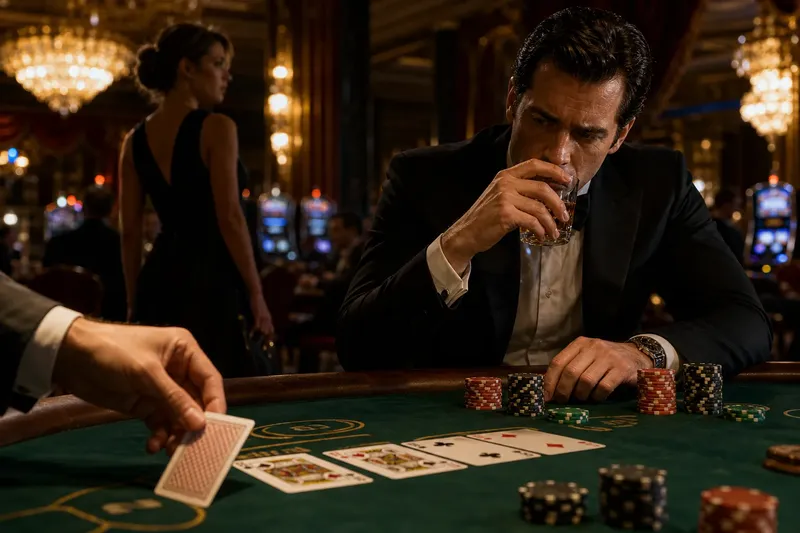
A dealer turns over a card, and the film cuts not to the players but to a character’s hand tightening around a glass. That shift shows how a casino scene changes a film’s stakes: the game can become a cue for what a character is trying to hide, rather than a contest the audience must follow closely.
Casino scenes often borrow the shape of familiar games, then bend that shape toward character. A card, a wheel, or a wager gives the scene a visual event; editing and sound decide what that event means. The most revealing question is not always who wins. It may be why the film shows this game, and what the character does once chance has spoken.
Game mechanics become a film’s visual vocabulary
Cards and chips are useful props because they make decisions visible. A hand can remain face down; a chip can cross a boundary; a dealer’s gesture can end a moment of hesitation. These actions let a film communicate intention without stopping for explanation.
But the prop does not carry one fixed meaning. A face-down card might suggest secrecy in one scene and simply mark a delayed reveal in another. A filmmaker builds meaning through framing, timing, and the reaction that follows. A close-up on a character’s fingers can matter more than a wide view of the table if the story is concerned with self-control.
Sound can shape the same vocabulary. A film might make the shuffle crisp and prominent, then soften the room when a character faces a choice. The audience hears the game’s texture, but the mix also steers attention toward the character’s pause. The room’s sound becomes part of the storytelling, not a claim about how every casino sounds.
Editing can make chance feel like fate
A game produces uncertainty, but a film controls when viewers encounter it. By cutting away before a reveal, holding on a reaction, or showing the result before a character sees it, an editor can make chance feel ominous, comic, or almost destined.
That impression comes from arrangement, not from the game itself. If a scene repeatedly pairs a character’s risky decisions with ominous music and sharp cuts, the audience may read the outcome as part of a larger pattern. A different edit could make the same result feel arbitrary. The film’s form gives random events a place in its moral or emotional logic.
Imagine a fictional scene in which a character has promised to leave after one hand. The film cuts from the dealer’s final card to the character’s waiting friend by the exit, then returns to the table. The card decides the hand; the edit makes the promise feel like the scene’s real test. The expected result is that viewers watch for whether the character honors the agreement, not merely whether the hand is won.
Casino films use familiar images with different meanings
Popular media has built a recognizable visual shorthand around casino play: the dramatic reveal, the composed player, the sudden reversal. A film can use that shorthand to orient viewers quickly, then complicate it by showing a character who is bored, frightened, or uninterested in the performance expected of them.
This is where genre matters. A crime story may use a game to stage deception; a comedy may turn the same rituals into awkward timing; a romantic drama may make the table a backdrop for a conversation neither character can manage elsewhere. These are conventions, not rules. The scene earns its place when its particular choices fit the film’s tone and characters.
It also helps to distinguish the cinematic image from real gambling. Films compress time, simplify rules, and give outcomes dramatic timing. Their scenes can reveal how a culture imagines risk or confidence, but they should not be treated as reliable descriptions of a game’s odds or of how people behave in actual casinos.
A game can reveal character without explaining it
What matters is often the response to an uncertain result. One character may laugh off a loss, another may blame a companion, and a third may quietly leave. The result gives each person a prompt; their behavior supplies the meaning.
This approach can make a scene feel specific without a speech about character. A careful player might refuse a tempting wager because of a promise made earlier. A confident player might keep talking after the game has stopped favoring them. The audience reads values through action, while the story leaves room for contradiction.
A useful interpretive distinction is between what the character says the game is about and what the film shows them protecting. They may claim to care about the prize while watching a friend’s reaction. They may say the risk is trivial yet become visibly unsettled when someone questions their judgment. That gap can reveal the scene’s emotional subject.
What do casino scenes ask viewers to notice?
Why do filmmakers show the cards so closely?
A close-up can make a small object carry suspense or symbolize a character’s desire for control. Its meaning depends on what the film emphasizes before and after the reveal.
Does a viewer need to know the game’s rules?
Not always. A scene can remain clear if viewers understand the immediate choice and the character’s response, even when the full mechanics are left unexplained.
Can a random result have symbolic meaning?
It can acquire meaning through the story’s framing, but the game itself does not prove that a character deserves a particular outcome. Music, editing, and later choices guide the interpretation.
What separates a cinematic casino from a realistic portrait?
A cinematic scene is arranged for story: it may condense events, simplify rules, or time a reveal for emotional effect. A realistic portrait would need different priorities and should not be inferred from a dramatic sequence alone.
Read the scene through its choices, not its glamour
When a casino scene appears, notice what the camera treats as important. Does it linger on the game, the character’s face, or an object outside the play? Does the soundtrack make the result feel inevitable, or does the editing preserve uncertainty? Those choices often reveal the film’s point of view more clearly than the size of the wager.
To understand why a casino scene changes a film’s stakes, follow the moment after the result. The character’s next action may honor a promise, expose a fear, or turn a game into a symbol the story will carry forward. Chance supplies the prompt; the film’s attention tells viewers what to remember.